
Free breakfast isn’t in a public school teacher’s job description. In Misamis Occidental, Teacher Jeric Maribao serves it anyway, and a good chunk of it comes out of his own pocket.
Known on social media as Jerics Channel, Maribao teaches at Bag-ong Anonang Diut Elementary School, up in the mountains of Bonifacio. He went viral in 2022 for turning topics into songs and dances so his pupils could actually remember them, including a number about homogeneous and heterogeneous mixtures set to a folk dance tune.


Around the same time, he started feeding them by using his earnings from social media. According to him, it began after the pandemic, when some of his students stopped coming back because they’d started working at home. He figured a warm meal might bring them back.
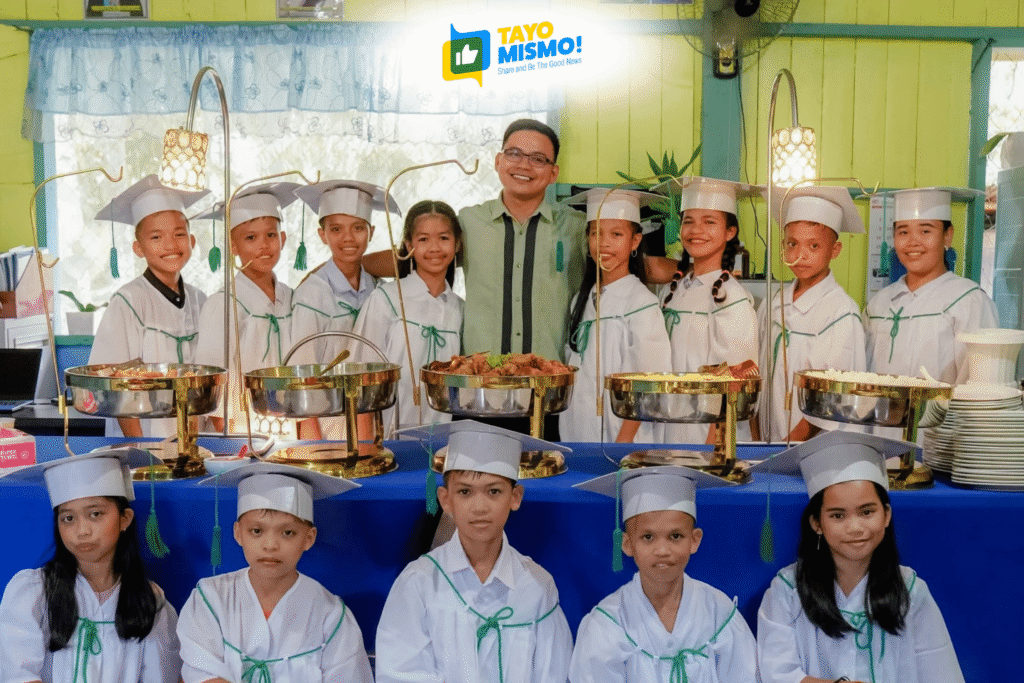
He started with his advisory class. By 2025, he was providing food to almost every pupil in the school—from Grades 1 to 6. What pushed him, according to a GMA feature, was what he kept seeing in their packed lunches: dried fish, an egg, salt, sometimes just plain rice.
The menu has gotten more generous since. At times, it had been lechon with rice and a water tumbler.


But where does he get the funds? He says the money comes from his teacher’s salary, his vlog earnings, donations from netizens, and a peanut butter business that splits its profit between himself and the kids.
Aside from cooked meals, Maribao also gives out school supplies, uniforms, bags, and groceries, with sacks of rice for the students’ families, some of it made possible by followers who have also funded scholarships.
Pupils with high grades have gone home with chickens and piglets to help their families earn. He bought land and built a house near the school so he could keep going, and he’s been working on a project called 5P, short for Pantawid Pambaon sa Eskwelahan for Pupils Project, that would give students a monthly allowance funded by their parents’ corn farming.


For students in places like Bonifacio, getting to class is its own effort. In one of Maribao’s TikToks, pupils are already waiting at school at around 3:30 a.m., some of them having traveled from far-off areas.
The Department of Education (DepEd) named him a DepEd Hero in February of 2026 for his efforts in incentivizing his students to stay in school and providing them and their families with necessities.
If one teacher’s willingness to cover the gap—using personal finances and vlog income—can sustain a school’s feeding program, what can we collectively do to help our students in rural areas? Even small, consistent efforts from schools, community groups, and everyday Filipinos can help make sure no student has to learn on an empty stomach.