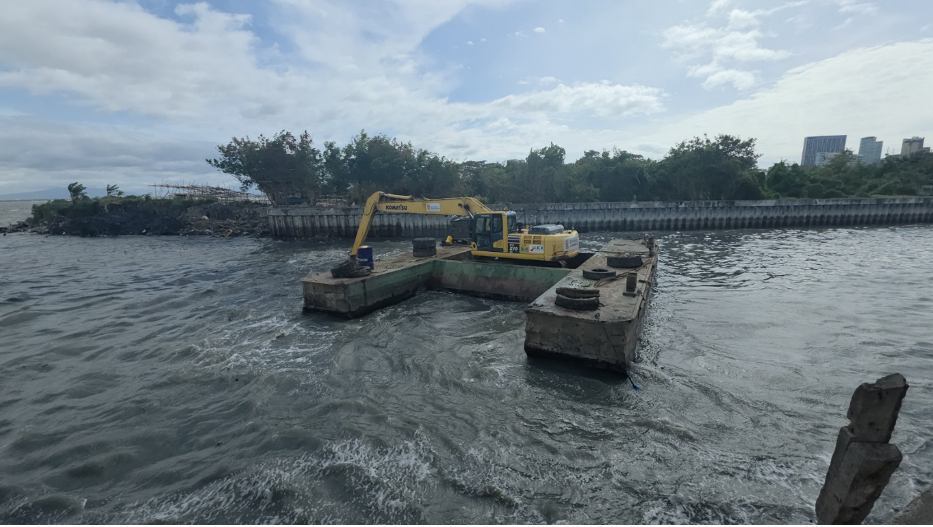
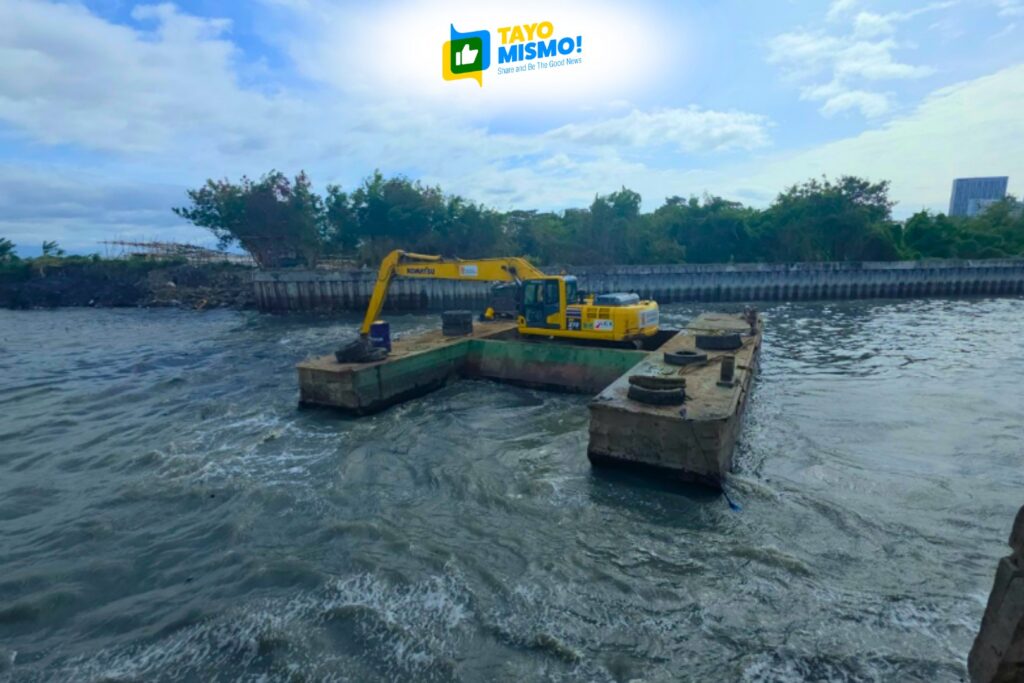

In parts of Muntinlupa’s Alabang River, change is beginning to show in small but visible ways. Water now moves more steadily through sections that used to clog during storms, especially in areas bordered by dense residential communities and major transport corridors like SLEX.
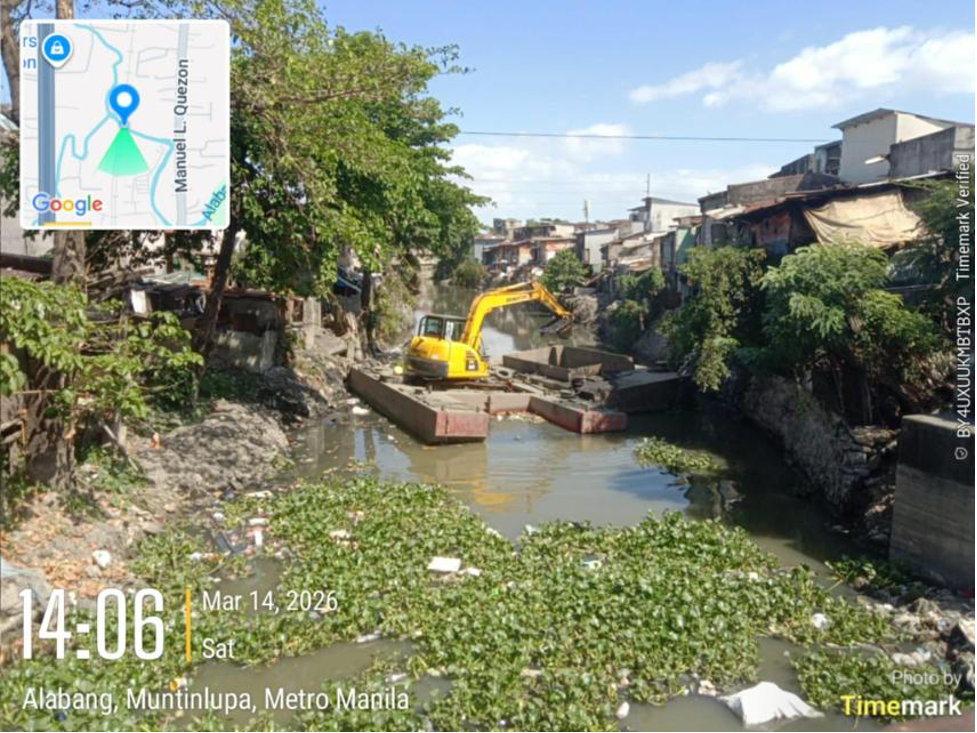
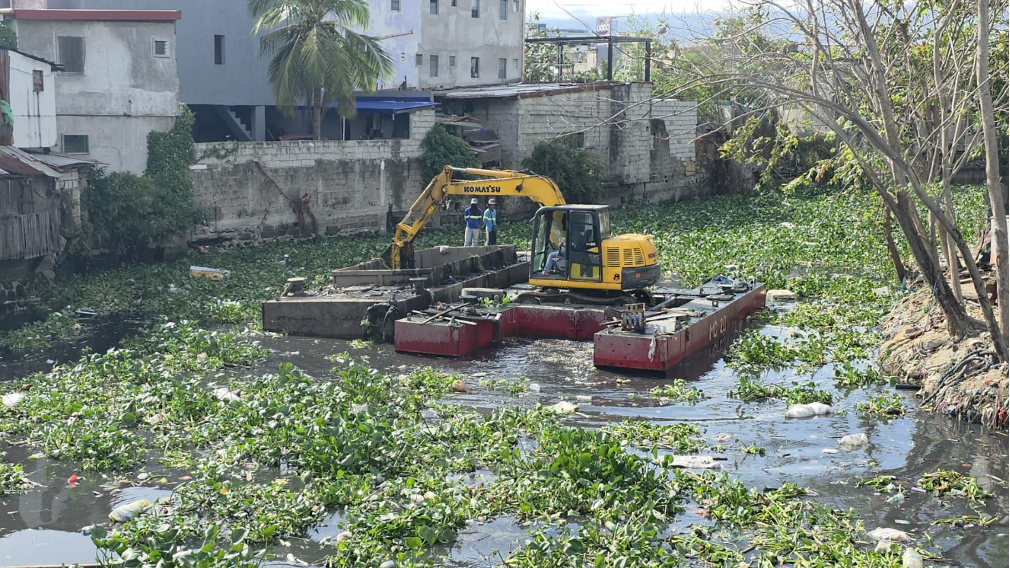
The development is tied to ongoing rehabilitation work under San Miguel Corporation’s Better Rivers PH program, which has been operating along the river since a flooding incident at the Alabang Viaduct in July 2025. The event prompted coordination between the Muntinlupa City government and the Department of Public Works and Highways, setting in motion a sustained cleanup and dredging effort.
Since then, the program has removed 62,363 metric tons of silt and waste from the Alabang River. Work has covered stretches from its mouth at Laguna de Bay, through Cupang Bridge and the PNR Railway Bridge, and is now progressing further upstream toward the Alabang Viaduct area. Alongside dredging, sections of the river are also being widened to improve its capacity during heavy rainfall.
The development is not dramatic, but it is increasingly noticeable on the ground. In areas that used to slow down during storms, water now appears to pass through more easily, easing pressure on surrounding communities that have long dealt with flooding risks tied to river overflow and blocked channels.
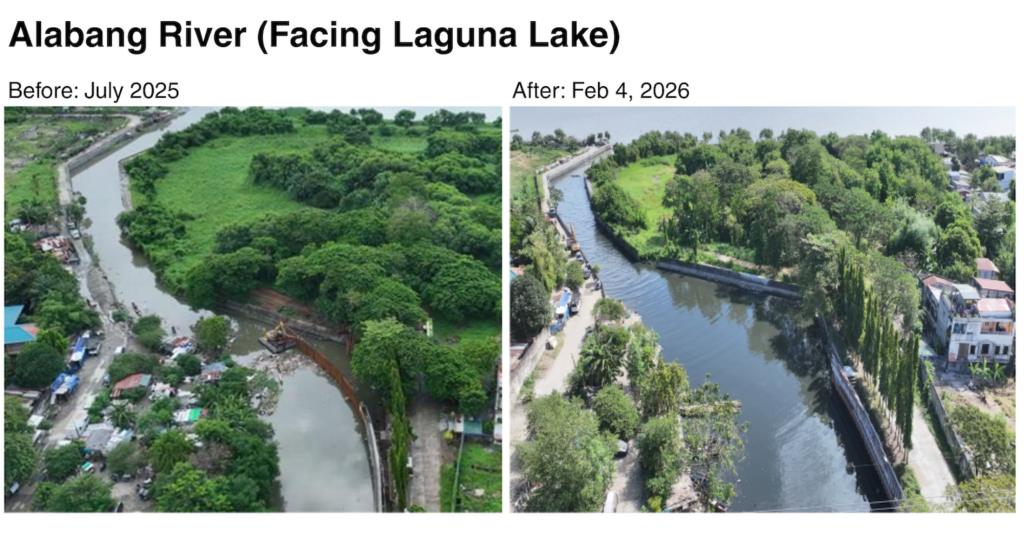
For residents along the riverbanks, the impact is practical rather than abstract. Flooding in the area has been shaped over time by accumulated silt, waste, and narrowing waterways that reduce how much water the river can carry during heavy rains. Clearing these obstructions does not eliminate the risk entirely, but it helps restore part of the river’s flow capacity.
A long-term investment in effective river systems
The Alabang River is part of a wider network of waterways under rehabilitation through Better Rivers PH. Across Metro Manila and nearby provinces, the program is also active in river systems in Las Piñas, Parañaque, Navotas, Bulacan, and Laguna. Since 2020, it has reported the removal of more than 9 million metric tons of silt, garbage, and debris across at least 10 major river systems, covering over 184 kilometers of waterways.
These efforts often run alongside local initiatives, including the relocation of informal settler families from danger zones and the clearing of structures that have encroached into river easements over time. While less visible than dredging operations, these measures shape how effectively river systems can function in the long term.
SMC Chairman and CEO Ramon S. Ang described the program as a continuing commitment to flood mitigation and environmental rehabilitation, saying, “Through these ongoing clean-up and rehabilitation efforts, we reaffirm our commitment to flood mitigation and environmental rehabilitation, working closely with local government units to help protect communities and improve the condition of our rivers.”
The work in Alabang is still ongoing, and the challenges remain. But in stretches where water once stalled during heavy rains, movement is beginning to return steadily, and with it, a measure of relief for the communities along its banks.