
There’s a certain kind of quiet in Pasil, Kalinga. Not the empty kind, but the kind that lets you notice things. The sound of rice being harvested by hand. The crackle of fire under a clay pot. The rhythm of people working, cooking, talking, all at their own pace.
We were in Barangay Dangtalan as part of a community-based tourism program by the Tourism Promotions Board, but it didn’t feel like a typical visit. There were no rehearsed moments, no polished versions of culture on display. What we saw was daily life that was shared openly, without needing to be dressed up.
Here, the idea of “slow food” doesn’t need explaining. It’s already embedded in how things are done.
The community in Pasil has since been recognized as part of the Slow Food movement, but listening to Walter Jensen, a community volunteer, you get the sense that the label came long after the practice.
“As much as possible, we get our ingredients from our farmers. There’s fairness in that, and it makes sense. We support them because they’re the ones, we rely on,” he said.
That connection shows up in the food, but it starts much earlier—in the soil, in the planting, in the waiting.
Life that isn’t rushed
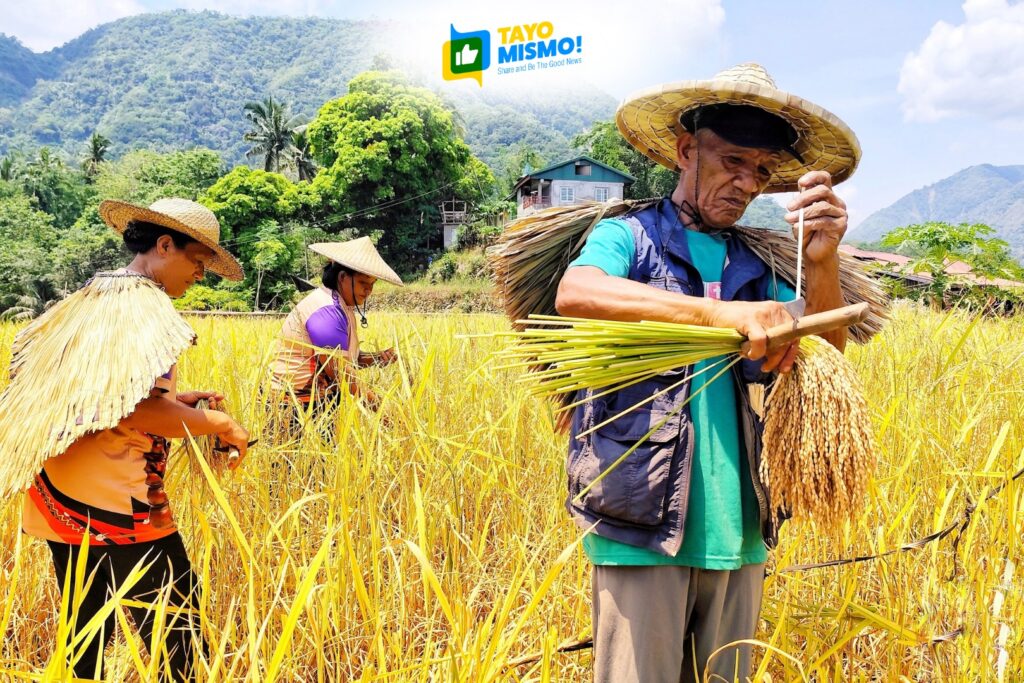
We watched farmers harvest heirloom rice, carefully cutting each stalk by hand. No rush, no machines humming in the background. Just steady work, the kind that takes time because it has to.
Jensen talked about that patience, too. “The cultivation of taste doesn’t start when you cook,” he said. “It starts when you plant.”
Later, that same rice made its way to the table, alongside dishes prepared the way they’ve always been. Three stood out right away: intum ji ugwilas an lamka, a light but deeply comforting soup made with foraged greens; dinuguan na native pig, thicker and richer than what most people are used to; and inanger native pig, smoky, slightly charred, and meant to be shared.
The rest of the spread kept coming: intum ji lichoy, intum ji papait, adobong native pig, pukor with roasted kurjis, pikaw with sardines, and lischog. Some familiar, some not. All of them are tied to what the land can give.
Nothing felt excessive or rushed because the way the food was cooked mattered.
Culture that transcends time
In Dangtalan, many of the pots still come from the village itself. The oldest pot maker, Kum-as Sangga—well into her 80s—continues to shape clay the same way she learned as a child. No wheels, no shortcuts. Just hands, memory, and repetition.
She and the other women showed us how it’s done, guiding us as we tried (and mostly failed) to shape our own pots. There was a lot of laughter, a lot of starting over.
At one point, they performed the Banga dance, balancing pots on their heads with ease that made it look almost effortless. Far from just a performance, the dance felt like an extension of the same work they do every day.
Everything connects back to food
Walter mentioned how everything connects back to food—the farming, the cooking, even the dancing. Not in a grand or dramatic way, but in a way that just makes sense when you see it up close.
And that’s probably what stays with you.
Because outside places like Pasil, it’s easy to forget where food comes from. Easy to prioritize speed, convenience, and volume. Easy to lose track of the people behind it. Here, that distance doesn’t exist.
What you eat is tied to whoever grows it. What you cook is shaped by what’s available. What you pass on is something you’ve lived, not just learned.
It’s not perfect. There are challenges such as changing climates, shifting economies, outside influences that inevitably find their way in. Jensen acknowledged that, too. The yields aren’t always as fast, and the costs can be higher. The work is almost always harder.
But there’s a reason they keep doing it this way. Because it holds something together.
For those of us coming from the outside, the goal is not to live exactly like they do in Pasil (that wouldn’t make sense). But there’s something to be learned from the way they value what’s already in front of them.
Maybe it starts small.
Paying more attention to where food comes from. Choosing local when it’s possible. Supporting farmers, even in simple ways. Letting things take a little more time.
Because if there’s anything Pasil makes clear, it’s that slowing down is not about doing less, but about holding on to what matters, before it slips away.