


Access to legal help can be difficult for many Filipinos, especially those who lack the resources or connections to seek professional guidance. A new partnership aims to bring legal services closer to communities that need them most.
McDonald’s Philippines has partnered with the Integrated Bar of the Philippines Quezon City Chapter (IBP-QC) to support the Supreme Court’s Unified Legal Aid Service (ULAS) program, allowing the company’s legal team and legal partners to take part in community-based legal aid activities.
Through a Memorandum of Agreement, McDonald’s Philippines will integrate its lawyers’ mandatory legal aid obligations into volunteer initiatives under its Good Trip Platform, the company’s official volunteerism program. The partnership will include participation in legal aid caravans and outreach activities that provide legal guidance to individuals with limited access to legal services.
“Today, we are not just signing a Memorandum of Agreement. We are affirming a shared commitment to expand access to justice and serve communities in ways that are meaningful and lasting,” said Atty. Benjamin Jeremias B. Cruz II, general counsel and legal head of McDonald’s Philippines.
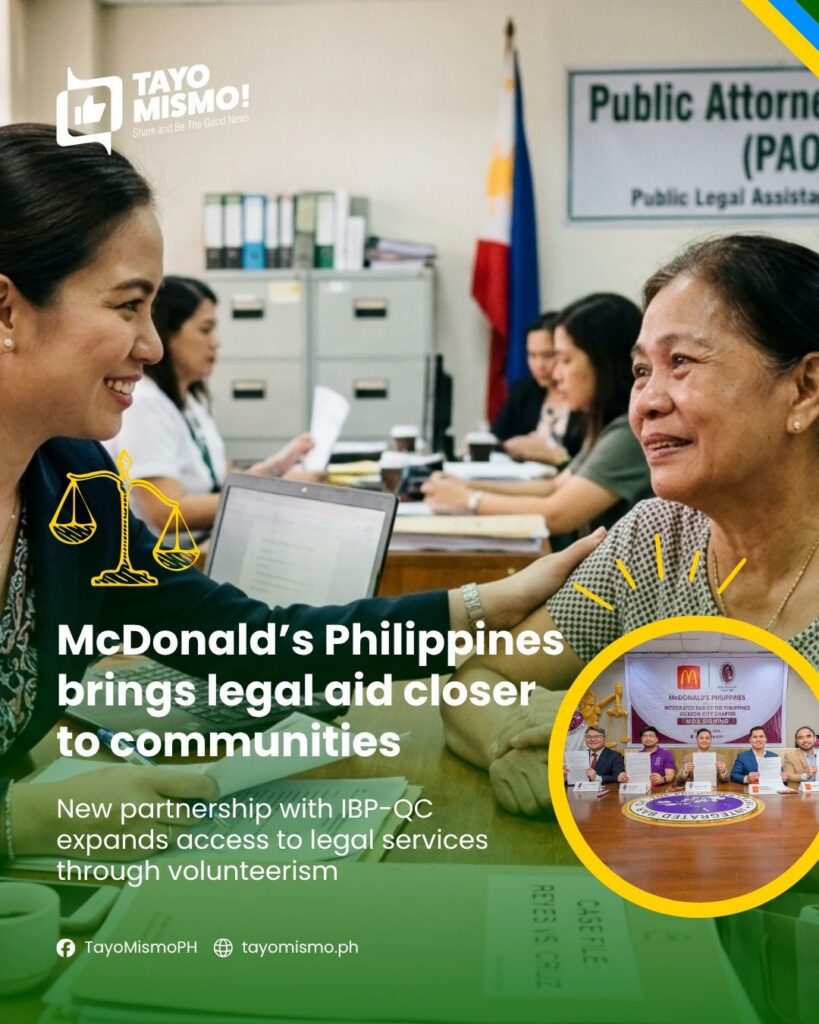
The collaboration brings together the legal expertise of McDonald’s Philippines and the long-running community work of IBP-QC, the largest chapter of the Integrated Bar of the Philippines with an award-winning legal aid program.
By working together, both organizations hope to encourage more members of the legal profession and private sector groups to use their skills and resources in helping communities navigate legal concerns.
“We welcome this partnership with McDonald’s Philippines as a meaningful step in expanding the reach of legal aid services to more communities,” said Atty. Rowell D. Ilagan, president of IBP-QC.
Legal support can make a difference in helping people understand their rights, address concerns, and access available remedies. Partnerships like this show how organizations can use their expertise beyond their usual roles to serve the public.
Communities and organizations can take inspiration from this initiative by finding ways to share their own skills, resources, and networks. Whether through professional services, volunteer work, or local programs, every effort can help make support more accessible to those who need it.